Thursday, March 10, 2011

Dai Anga's Tomb


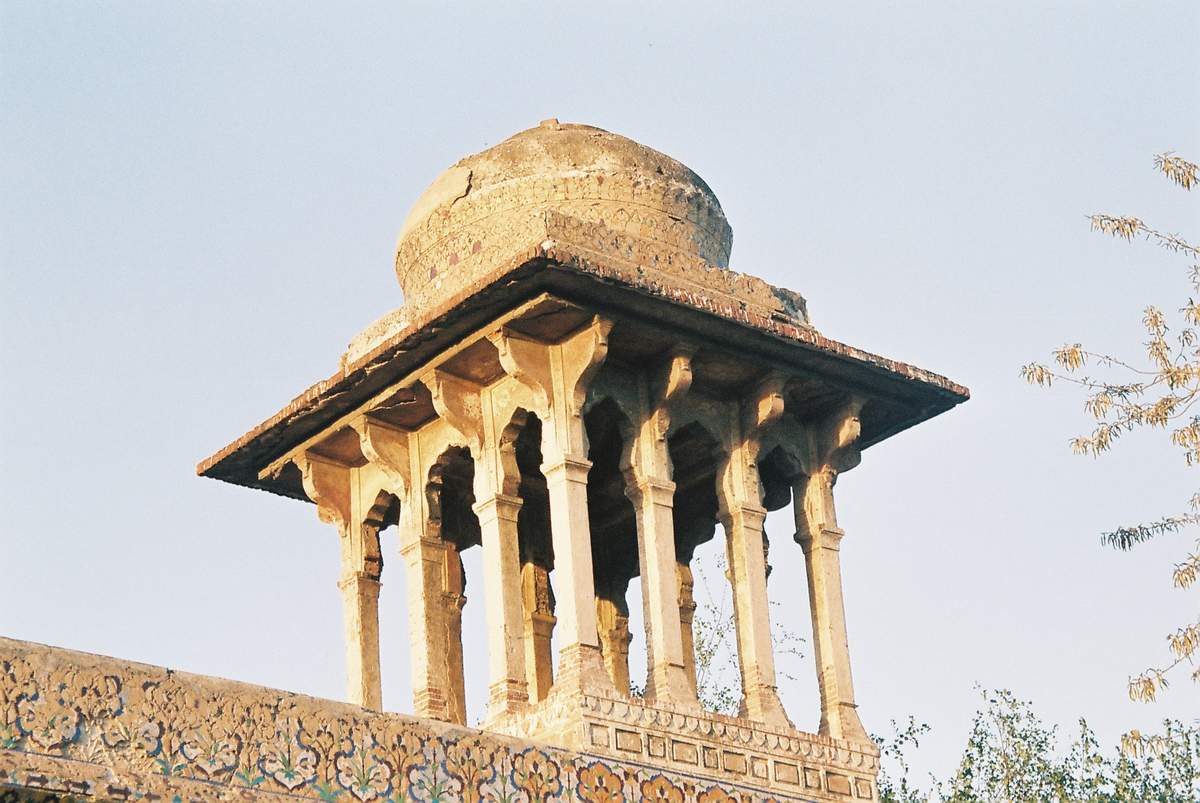
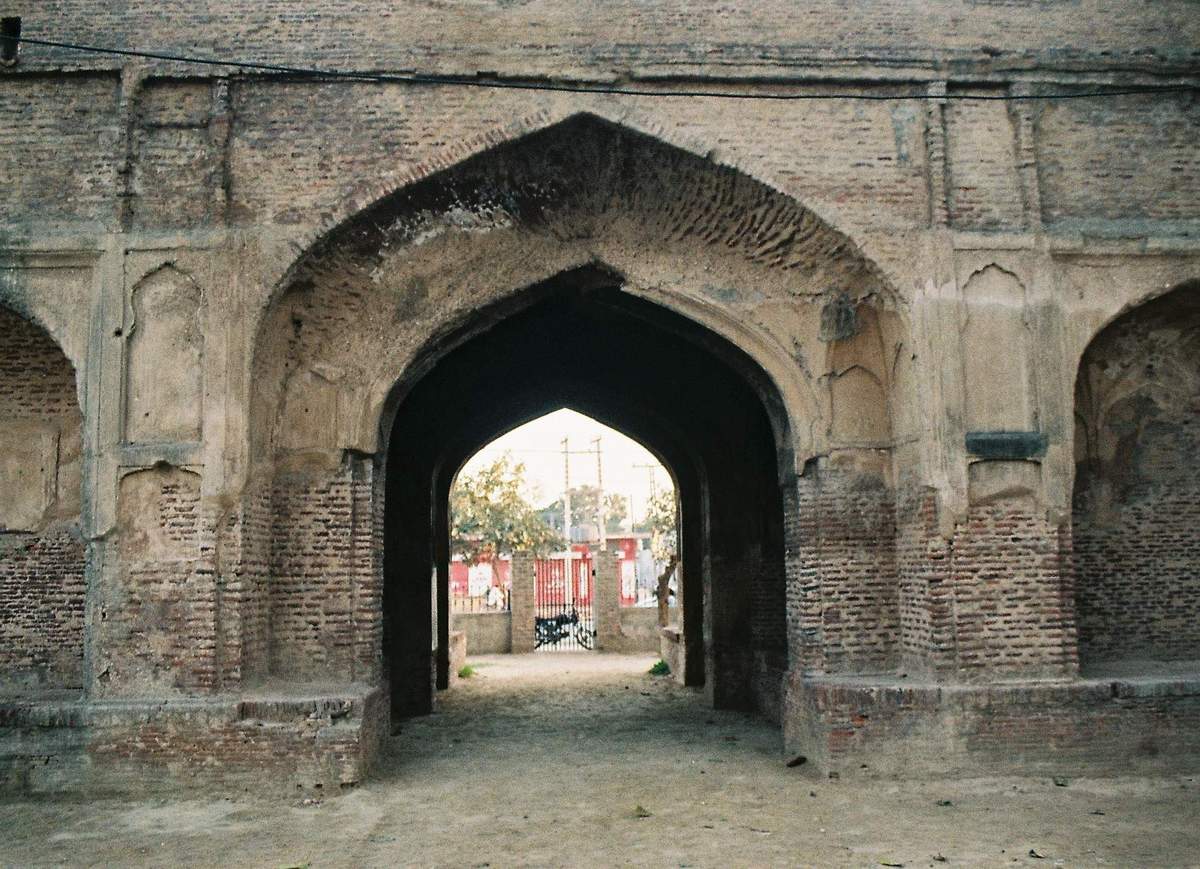
Zeb Un Nisa aka Dai Anga, was a wet nurse of Mughal King Shah Jehan and was well respected in the royal family. The tomb of Dai Anga is known as the Gulabi Bagh. Her family was closely associated with the Mughal empire. Her husband Murad Khan served Emperor Jahangir as Magistrate of Bikaner, and her son Muhammad Rashid Khan, was the best archers in the kingdom, and died fighting in the service of Shah Jahan's eldest son Dara Shikoh. Shah Jahan highly regarded Zeb Un Nisa.
[Wikipedia]

The tomb of Dai Anga is located in Begumpura, Lahore

Photo Credits: Shiraz Hassan


Friday, March 4, 2011

Colors of Gumti Bazaar


Gumti bazaar of the walled city has an unique identity due to its historic and cultural importance. It is one of the oldest markets of the walled city of Lahore. However, mere historical facts are unable to answer questions like “when was this bazaar established and by whom and why was it named so?”,

It is said that it was established during the Moghal Era and by the time it established as big market.

Located in the centre of walled city of Lahore, Gumti bazaar is the centre of attraction for different reasons. This market is famous for Meena-kaari, Gota Kinaari, clothes, leather-items, wooden fabrics and artificial jewelry.

Beautiful pieces of artificial jewelry are available here within the range of Rs 500 to Rs 5000!

Gumti bazaar is located in the centre of Walled city of Lahore, so, one can enter into this market from different directions. Entering from Roshnai Gate or Bhaati gate and passing through Paani-Wala Talaab or from the direction of Lohari gate, you can reach this place by passing through Lungey Mandi.

Entering the market from Paani-wala Talaab, Ice-cream shops welcome you. As you move on you will see the leather goods shops on both sides. Keep on moving till you reach Chowk Gumti Bazaar. The bazaar is divided into two parts. Moving straight will take you towards Rung Mehal, another famous market. But look at the left side and you will see the true colors of Gumti bazaar. The lane is a bit narrow here, but glittered and bright due to colorful lighting.

Here, you can buy glass bangles, artificial jewelry, wedding dresses – basically a shopper’s paradise for the ladies. Specially, women prefer to do their pre-wedding shopping here. The very next bazaars are the Sooha bazaar and the Awaami

Before partition, Gumti bazaar was an area mostly populated by Hindus. The residental areas around Gumti bazaar are known as Galli Kali Maata, Koocha Beli Ram, Koocha Harjis Roy and Koocha Hanuman. There was only one Muslim family who used to live in Koocha Hanuman before partition. It was the residence of Molana Salah-uddin Ahmed, a writer and editor of the literary journal “Adabi Dunya”.

Rehana Bano, an old resident of Gumti bazaar says “Before partition, Hindus used to live here and I was living here with my grandfather during that period. I still remember that I was the only Muslim girl in that particular area. Hindu and Sikh children used to play in our yard, because it was quite wide and open. During games, I was also asked to swear by Kali Maata, and I did it many times”

Besides that, Gumti bazaar has also remained home of several important personalities. Indian film actor Om Parkash was born in Koocha Beli Ram and spent his childhood in the narrow streets of Gumti bazaar.

Gumti Bazaar is also famous for its painters. Prestigious painter Abdur Rehman Chughtai was one of them. He started his career as a wood pattern maker here. Then moved to Mayo School of Arts (Now National College of Arts) and carved his name in the history of colors and arts. Painters Master Ameer Bux and Meeraan Bux also belonged to the Chughtai family. They used to live in Koocha MusawwiraaN of Gumti bazaar. Later Master Ameer Bux was appointed as the head master of Municipal Technical College, Amritsar and Meeraan Bux joined Mayo School of Arts. Delhi’s Rashtrapati Bhawan (President’s House) was also designed by Meeraan Bux. Famous Sikh artist Naqaash Lahora Singh was also a resident of Gumti bazaar. His paintings are displayed in Patiala Museum.

As Gumti bazaar was a Hindu populated area, there were several Temples and Shivala buildings located here. Shivala Pandit Radha Kishan was known for its beautiful architecture. It was located near Syed Mitha Bazaar. Kali Maata temple was also another well known place of worship nearby. The street around this area is still called as Kali Mata Street. There was also a temple between Sooha bazaar and Gumti bazaar named as Krishna temple. Krishna temple was well-known for its beautiful and eye-catching architecture, which was known as ‘Sundar Mandir’ (Beautiful temple). As time passed, things changed, Hindu and Sikh residents left the area before and after the partition and now these temples don’t exist anymore, and one has put on a lot of effort to locate them.

It is really sad that most of the old buildings including temples and Havelis have been demolished and commercial plazas have replaced them.

Gumti bazaar is one of the typical Lahori bazaars, bursting with colors and lights.

Here are a few images of Gumti Bazaar.

Photos by: Afzal Abbas


Tuesday, March 1, 2011

Two Faiz celebrations in Lahore


By Ammar Aziz

Lahore’s Mall road was as crowded as always. Behind the modern age vehicles – coming violently from the both sides of the road- and amongst the old silent trees, I saw him, walking very slowly on a footpath. The old man was holding a little red flag. Those ragged dusty clothes, lengthy gray hair, wrinkled mystic face and small piece of scarlet; there was something very dramatic about that old man whose appearance reminded me of the realist Soviet paintings. He was heading towards the building of Alhamra Art Complex which was covered with the life sized posters of the Socialist poet Faiz Ahmed Faiz. The poet’s centenary celebrations were about to begin and the car parking was almost full.

The old man stood there for a short while and looked at the smiling photograph of the poet. He then entered the main gate and headed towards the hall. One could find a lot of ‘cultured’ men and women, walking with an attitude towards the hall. All of those well-dressed, well-spoken people started entering the hall, but the old man kept standing there. The guards were not letting him enter. He remained there until the gates were closed and the hall echoed with the radical words of Faiz, Hum Dekhaingey – We shall see, We shall see…but the old man never saw anything! He could not afford to buy a ticket for a thousand rupees to celebrate Faiz day!


What an ordinary incident, isn’t it? It did not make any difference at all. It rained heavily that evening. The cars kept passing on the mall. All the people came out of the hall cheerfully. They were excited to see the VIPs from Bollywood. I heard, an aged gentleman saying, ‘We’ll drink tonight till late. Its Faiz’s birthday after all!’ But the old man kept sitting there on stairs. ‘They asked to buy the ticket. I don’t have a thousand rupees’, said the poor working class admirer of the working class poet. He added, ‘I came from Faisalabad to celebrate the 100th birthday of our beloved poet.’ Rahmat was an oppressed power loom worker, who – like thousands of other people – could never afford to enter that high-class intellectual gathering dedicated to the proletarian poetry of Faiz Ahmed Faiz.

The centenary celebrations of the man who fought against class-system all his life was clearly divided into classes. The next day was supposed to be an ‘Awami Mela’ known as Faiz Peace Festival. This event is being organized every year by the Progressive Writers Movement with an affiliation of the left-wing organizations at the open air theater of the Lawrence garden. But unlike every year, this time the organizers (Faiz’s family) – who were the organizers of the elitist event mentioned above – decided to organize the Peace Festival as well. It was open to all so it was truly filled with thousands of people, the workers and activists, who are the real family of Faiz. PTV was given the exclusive rights to cover the event.

Hundreds of red flags, Socialist slogans, working women and men – the ambiance was extremely radical. The program began with a couple of folk performances and later on pop singers started performing. They sang everything, the songs of love and breakups, the songs that commodify feminity, the songs that Faiz never wrote and never sang! Faiz’s struggle was not only against the unequal distribution of wealth but also against the limitation of art for the sake of art. His poetry was the poetry of life and his words were the celebration of people’s struggle. There was no one at the Faiz Peace Festival to sing those songs that have been the anthems of resistance since decades. Instead, the whole day was dedicated to lovey dovey songs and cheap attempts of entertaining the ‘poor ignorant masses’. The people kept waiting till late but there was no one to reflect real essence of the poet.


As Faiz said, ‘ab yahan koi nahin koi nahin aay ga..’
Imagine! Different Faiz days for different classes! An intellectually mature event, with performers like Tina Sani, and speakers who reflected the real Faiz, only for a certain class and saucy songs, cheap comedy for the people who understand and can relate to the poet more than the drawing-room intellectuals. Who has a right to underestimate the common people like this? The organisers of Faiz festival killed the centenary celebrations, that are being celebrated around the world with great respect. They valued Faiz Ahmed Faiz for Rs. 1000/person! I wish they could take some time out from the U-fone and Coca-Cola campaigns or they should not have claimed to own the poet.

However, the real family of the poet, the oppressed working class, continue to live and celebrate the poetry of Faiz in their daily lives.

Originally Posted at Pak Tea House


Tuesday, January 18, 2011

Cinema for Peace-building


If there’s one thing in common between the people of India and Pakistan, it would certainly be the love for cinema.

Cinema or simply film is a story conveyed to the audiences through the use of audio-visual medium using animation techniques or visual effects.

The history of cinema goes back to hundred years ago in late 19th century when the films developed occasionally for special festivals. The gradual development of the cinema turned it into one of the most important tools of communication and entertainment, and mass media in the 21st century.

Nowadays, films are considered to be an important art form, a source of popular entertainment and a powerful method for educating or instructing people. It has not only remained to be a source of entertainment but also work as tool of public opinion and helps in setting the mind of a society.

Films are also called objet d'art (artifacts) of cultures reflecting the specific cultures, and, in turn, affecting them.

In the words of Ingmar Bergman, “No art passes our conscience in the way film does, and goes directly to our feelings, deep down into the dark rooms of our souls.” This citation substantiates the belief that film is the most powerful form of all communication techniques and leaves a profound impact on the psyche of an individual and in turn affects the society.

This influential tool if used for the purpose of disseminating peace messages to the audiences of different cultures can infuse the feelings of peace, tolerance and compassion among people of diverse cultures.

Today as Pakistan is struggling with serious issues of terrorism, extremism and violence of human rights. While the neighboring country, India is also facing the threats of terrorism. It is only the diffusion of peace messages through chinema which can bring the two countries together to combat the menace of terrorism together.

As after the world war in Europe hundreds of films were produced with message of peace, neglecting violence and bloodshed. This played an important role in the constructive development of their society and for reducing the violent behavior of a society.
In the same way, Pakistan and India should both work on films conveying the message of peace and unity in order fight off the elements of extremism in the society and promote peace in the region.

Peace is at the core of a successful society. However, despite of co-existing in the same region for hundreds of years, sharing same background, culture and history, we are unable to maintain peace between two neighboring nations which encourages the adversary i.e. terrorism.

However, fortunately the people of both countries have strong bonding with each other because of hailing from similar backgrounds. In fact people-to-people contact has never weakened even when there are tensions at government level.
To keep this bonding strong and deep, there is a need to strengthen the cinemas of Pakistan and India to put across the messages of peace through our films, which portray the feelings of the society.

Indian cinema is considered as world’s leading film industry producing hundreds of films each year in different regional languages. In this regard, the Indian cinema has a greater role to play in promoting peace in the region.

On the other hand, Pakistan film industry is small and was not lucky enough to flourish as compared to Iran or India. But during the past decade, Pakistani film industry has produced some high class films which have been popular among the masses.

In recent times a few co-productions films of Pakistan and India were also produced which broke the ice between the film industries of both countries and conveyed a good gesture to the audiences.

Mohammad Nazim, student of Film and Television at National College of Arts, Lahore believed that films have direct impact on the society as compared to other toolsof communication. “Usually it is said that we depict the real face of society in films, but in fact of people get inspired from characters in the films and then imitate those characters. This is why it is necessary to produce good films with message of peace which could promote religious and ethnic harmony in region” Nazim added.

Sarmad Saeedy, a journalist and researcher believed that “Films can change the behavior of the society because film is culmination of all art forms... Film is the combination of other forms of art so it results in setting grounds for peaceful and positive trends to over all society.”

To promote the message of peace through films, several youngsters from Lahore city of Pakistan, started a film club named “Dhanak” (meaning: rainbow) in collaboration with Institute for Peace and Secular Studies. The film club is defined as a film screening place which goes beyond the black and white categorization of our usual cinematic experience. The club, the rainbow of ideas, themes and issues provides a unique experience to its audience every week.

Diep Saeeda, social activist and chairperson of Institute for Peace and Secular Studies sharing thoughts on Dhanak said that “the basic idea behind our work is to create alternative discourse and to explore grey areas, if people start thinking after watching few films it means we are achieving our goal.”

It is said that good films are those which make the people think and let them wander off into the boundaries of imagination.

Sharing thoughts on different purposes of films, Umer Latif, a film critic and Engineering Student at National University of Science & Technology said “Cultural activities provide people an alternate way to express themselves for if they do not express in a positive manner, they might find other ways which could be violent as well.” He further said that films have been and still are used for propaganda purposes especially as an effective means for political and military propaganda. If films can be used for these dreadful means such as propaganda, then it can surely be used to promote peace. It should be.”

Relating the idea of peace-building and Dhanak film club, Umer said that “the basic idea behind Dhanak is to raise social and political awareness among the masses as well as underline the importance of common human heritage transcending the bounds of caste, creed and nation.”

Sahil Zafar, a young film critic had a different viewpoint to explain the nature of films. “Film is a medium; you can use it to promote peace, hatred, a vision, an ideal world, a critique of social norms, or just playful expressive images.”
Breaking down the points, Sahil explained in detail “For example, Leni Riefenstahl used it to make propaganda (but excellent and effective) movies to glorify Hitler's image and his vision. Bunuel used to show his hatred for Bourgeoisie & church, Chaplin used it to preach humanity in a different way, Jafar Panahi used films to expose ills present in Iranian society, Hanake used to expose the roots and reasons of creating evil ideologies through films, while, Godard used films for sheer entertainment and Bergman used it to study human beings, etc.
It is simple a medium which can be used to portray any idea or message in your mind.”

Recently an Indian film “Udaan” (2010) was screened at Dhanak film club. The film, directed by Vikramaditya Motwane, though did not get huge response at Box Office, but critics and movie fans loved the theme and storyline of this film here at Lahore. The film screening was highly praised by the youth of Lahore and they insisted that these types of human and psychological issues should be portrayed in the films.

Sana Jamal, a journalist and a movie buff commented “people of all ages watch the films, adore the films, discuss films and learn from films alike. Therefore there is a need to replace the stereotype subjects of the films with such themes which people can actually relate to in their lives. I feel the filmmakers today have a great duty to educate people as well as to entertain them.”

Film is like a mirror which is often used to portray the society. But if used as a medium for peace-building among nations and cultures can do wonders for the human society by bridging the differences. Films with a peaceful message can bring the people of different countries closer on the basis of humanity.

Message of peace can be promoted by making movies based on real-life issues, by using a realistic approach to discuss the social harms and by addressing the issues that are causing confusion in minds.
The medium of film works well because one is conveying the message embedded in entertainment which is one captivating forms of communication. Film gives an opportunity to the filmmaker to create an alternate reality, make the viewers part of that reality and allow them to experience it as well. But the task of a good filmmaker is not only to engage the audience in the world of cinema but also to instruct the audiences on the issues which might seem hard to convey through words.

A good film should not be a roller-coaster ride; it should a memorable experience, a worthwhile learning process. For only such good film can bring change, write a new history and could prove to be a new beginning… as Russian novelist Leo Tolstoy said “Let us forgive each other - only then will we live in peace.”

This Article was Published in Indian Magazine "Trail Blazer" January 2011 Edition.

Friday, January 7, 2011

Walled City and Gates of Lahore (Part 1)


The Walled City of Lahore

The concept of walled city is not new to the students of history and it has traditionally been associated with the defense of the city as the wall used to be the first defense line of the city. The concept is centuries old with its mythical presence in Greek epics and folk tales around the world. The gates of a walled city had their structure from this point of view and streets as well used to be narrowed in order to restrict the movement of heavy invading forces, their elephants or horses.

Wall of Old City
Lahore traditionally has 12 gates alongside its main wall which surrounds the city. Each gate has an old tree usually Banyan or Bohar tree a gol Bagh (Circular Garden) and a shrine near it. There also used to be an inn traditionally called “Takya” where travelers used to stay on nights as gates were closed at evenings. There used to be a Hamam as well at each gate for this purpose. Chopal system was the specialty of all gates where people used to stay at evenings and used to chitchat. The Lahore gates like other walled cities were constructed to enhance the defense of the city. And therefore the amendments or restorations in colonial period are mere embellishments in Gothic style and don’t have that functionality which was their prior characteristic in the period of Mughals. The wall encompassed the city and defined its boundary wall as the world advanced and population grew up the city stepped out of its wall and the gates lost their importance and left only as the monumental of their glorious past. The subcontinent has been famous for its walled cities mainly for the cities of Lahore and Delhi. Interestingly enough Delhi has a Lahori gate which faces Lahore and Lahore have a Delhi Gate.

One of the Gol Baghs( Circular Gardens) of Walled City
The Gates of Lahore

The Gates are Lahore as known as Delhi Gate, Kashmiri Gate, Sheranwala Gate, Masti Gate, Taxali Gate, Bhati Gate, Lohari Gate, Shah-Alami Gate, Mochi Gate, Akbari Gate, Yakki Gate, Roshnai Gate and a small gate knnow as Mori Gate.


1.Delhi Gate

Delhi Gate
Delhi Gate is situated on the eastern side of the wall of old Lahore. It is the oldest and the most important gate after the Lohari Gate. It was built in the times of Mughal Emperor Akbar when he made Lahore his capital in Punjab. kanhaiya lal kapoor writes in his book Tareekh-e-Lahore, “ This gate faces east and thus opens in the direction of Delhi and so it is called Delhi gate…Amritsar and Jalandhar are also in the same direction.” Masjid Wazir Khan and Shahi Hamam were built in the area of Delhi gate in the times of Shahjahan and further constructions were made outside this gate during the the stay of his son Dara Shikoh and that is why it was called Dara Chowk. 

Wazir Khan Mosque
It was trading hub in Mughal period and so it is now. During Sikh reign it suffered a serious blow as the structure was badly damaged. It was rebuilt in British era as the main structure was deteriorating and the ceiling was in shabby condition. Architect Ghafir Shahzad writes in his book “Ghar Ghaliyan aur Darwazy”, “ it has striking resemblance with British architect for its façade, dual columns and the style of windows.” Heavy traffic and encroachments have affected the beauty of Delhi gate. We learnt during our research that the government of Punjab have launched a project “ Sustainable Development of Walled City of Lahore Project” in collaboration with the Agha Khan Trust and World Bank to restore and preserve the cultural heritage of Lahore. Telephone and electricity system will be wired underground. the road from Delhi gate to Railway station will be rebuilt and broadened in order to avoid heavy traffic and to curb encroachments around old buildings and Jharokas. There is a ray of hope for this gate in this project.


2.Bhati Gate

Bhati Gate
Bhati Gate is on the southern side of the wall of old Lahore. It was also rebuilt in British period. It also has resemblance with Gothic architect especially for its dual arch. Its originally beauty was not revived in restoration. Bhati gate was the center of art and literature as “Paisa” newspaper and literary Magazine “Makhzan” were published from here and well known dramatist Agha Hashar, short story writer Ghulam Abbas, poets Sagar Siddiqui and Allama Iqbal and many others also used to live here. Theater companies and circus used to be staged here. Here the Pakistani film industry originated and flourished. But now it all has become a past.

3.Lohari Gate

Lohari Gate
Lahori Gate and the area around it is the oldest part of the walled city or “shaher-e-Panah”. Famous Anarkali Bazar is on its opposite side. It was the only gate that was rebuilt on its original design in British period as other gates were built on Gothic style. It had the vital importance from defense point of view in Mughal period and it was true representative of Lahore among all gates. Today its structure is in pitiable condition. The dome is about to fall and 21 feet wooden gate is badly damaged. Advertising banners and wall-chalking have enveloped the entire building. But all the same it stands there reminding its glorious past.


Tuesday, December 14, 2010

The Best Books on Lahore


1. City of Sin and Splendour: Writings on Lahore by Bapsi Sidhwa

'The ancient whore, the handmaiden of dimly remembered Hindu kings, the courtesan of Mughal emperors', the 'Paris of the East', Lahore is more than the grandeur of Mughal forts and gardens, mosques and mausoleums, the jewel colors of everlasting spring. It is also the city of poets, the city of love, longing, sin and splendour.

This anthology brings together verse and prose: essays, stories, chronicles and profiles by people who have shared a relationship with Lahore. From the mystical poems of Madho Lal Hussain and Bulleh Shah to Iqbal's ode and Faiz's lament, from Maclagan and Aijazuddin's historical treatises and Kipling's chronicles' to Samina Qureshi's intricate portrai5ts of the old city and Irfan Hussain's delightful account of Lahori cuisine, City of Sin and Splendour is a marriage of the sacred and profane. City of Sin and Splendour is a sumptuous collection that reflects the city it celebrates.


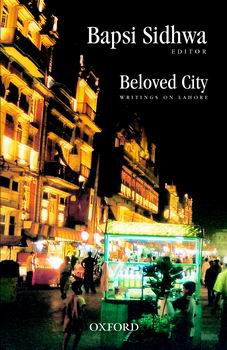
2. Beloved City Writings on Lahore by Bapsi Sidhwa

This anthology brings together verse and prose: essays, stories, chronicles, and profiles by people who have shared a relationship with Lahore. From the mystical poems of Madho Lal Hussain and Bulleh Shah to Iqbal’s ode and Faiz’s lament; from McLagan’s and Aijazuddin’s historical treatises and Kipling’s ‘chronicles’ to Samina Quraeshi’s intricate portraits of the Old City and Irfan Husain’s delightful account of Lahori cuisine, Beloved City is a marriage of the sacred and profane. Significant Pakistani writers like Intezar Hussain, Aamer Hussain, Kishwar Naheed, Bapsi Sidhwa, Sara Suleri, and Ashfaq Ahmed have also contributed to this volume. Sidhwa’s introduction to the anthology is a sentimental piece too.


3. Lahore: Portrait of a Lost City by Som Anand

Som Anand spent his childhood and youth in Lahore where his father, Faqir Chand Anand, was a respected banker. Som grew up totally free of religious communalism because he consorted with who shared his world view.

When Partition took place, the Anands decided to stay on in Model Town and Som was a witness of the communal excesses which took place at the time. In this loving and sensitive memoir, which recalls a pre-partition Lahore of harmony and peace, Sam seeks to restore his spiritual link with the great city of his childhood.

In Model Town, the suburban hideout of the wealthy aristocracy, the Hindus and Muslims lived in social isolation from each other but were friendly. In Icchra, Lahore’s suburban village, Som consorted with the followers of Allama Mashriqi.

In the inner city, he mixed with the Fakirs of Fakir Khans. He saw Ataullah Shah Bukhari calm down a crowd that had just broken the head of Zafar Ali Khan, the editor of Zamindar. He was friendly with the Bedis, and knew Englishwoman Freda Bedi who wrote her book about Punjabi women while she waited for her communist husband to be released from prison. The book is full of anecdotes and stories which should both delight and sadden many people across both sides of the historical divide.

4. Illustrated Views of the 19th Century by F.S. Aijazuddin

Pakistan's most important scholar of 19th century imagery shares his often personal collection of engravings, lithographs, paintings and numerous photographs of the old capital of Punjab. Fascinating captions add to an outstanding volume.


5. The Coffee House of Lahore: A Memoir, 1942-57 by K.K. Aziz

The Coffee House of Lahore: A Memoir, 1942-57 was published in 2008 and Aziz, in the opening chapters, tells us about the genesis of his passion to document this memorable phase of our contemporary history.

Whenever an intellectual, cultural and literary history of Lahore (or the Punjab and Pakistan) is written, the diverse circles which met and discoursed in the Coffee House will have to be described in detail and the ever-widening waves of their influence recorded. As nothing has been written so far on the subject and I don’t see anything in the offing, I give below a list of the important persons who I can recall.


6. Lahore: A Sentimental Journey by Pran Neville

Lahore, first published in 1993, is Pran Nevile’s tribute to the land of his birth. Grounded in memory and redolent with nostalgia, Nevile’s reminiscences transport the reader into the heart of Lahore as it was in the 1930s and 40s”a city bustling with activity where people coexisted harmoniously, unfettered by considerations of religion, region or caste. From the riotous seasonal festivities of kite-flying to clandestine love-affairs upon rooftops, from matinee shows at the cinema to twilight hours spent amongst the bejeweled dancing girls of Hira Mandi, Lahore emerges as a city of mesmerizing contradictions and chaotic splendor. The author underscores the contrast between pre- and post-Partition Lahore, and the sense of pain, loss and longing for one’s homeland experienced by the displaced millions in India and Pakistan is palpable. Evocative and informative, Lahore is at once social commentary, historical documentation and memoir.

7. Old Lahore by H.R. Goulding

Old Lahore , a book published in 1924, made up of “the reminiscences of a resident” by the name of Colonel H.R. Goulding ISO, VD, late ADC to the King Emperor. It also includes a historical and descriptive account of the city by T.H. Thornton, BCS, “for many years Secretary to the Punjab government.” Colonel Goulding – in whose memory one of Lahore’s roads is named, unless it is now called Shahrah Subedar Sumandar Khan – recorded his memories of the city by way of articles published in the Civil and Military Gazette from 1922 to 1924. They were later put together in a booklet by E.D, Maclagan, whose family links with Lahore went back to 1846. His father, an engineer, used to occupy quarters over the Hazuri Bagh gate of the Lahore Fort. Thornton and J. Lockwood Kipling, father of Rudyard Kipling, produced summaries of the history of Lahore, which were printed in 1860 in a guidebook. Kipling was principal of the Lahore School of Art, which then became the Mayo School of Art and today we have it as the National College of Arts


7. The Dancing Girls of Lahore: Selling Love and Saving Dreams in Pakistan’s Pleasure District by Louise Brown

The dancing girls of Lahore inhabit the Diamond Market in the shadow of a great mosque. The twenty-first century goes on outside the walls of this ancient quarter but scarcely registers within. Though their trade can be described with accuracy as prostitution, the dancing girls have an illustrious history: Beloved by emperors and nawabs, their sophisticated art encompassed the best of Mughal culture. The modern-day Bollywood aesthetic, with its love of gaudy spectacle, music, and dance, is their distant legacy. But the life of the pampered courtesan is not the one now being lived by Maha and her three girls. What they do is forbidden by Islam, though tolerated; but they are gandi, "unclean," and Maha's daughters, like her, are born into the business and will not leave it. Sociologist Louise Brown spent four years in the most intimate study of the family life of a Lahori dancing girl. With beautiful understatement, she turns a novelist's eye on a true story that beggars the imagination. Maha, a classically trained dancer of exquisite grace, had her virginity sold to a powerful Arab sheikh at the age of twelve; when her own daughter Nena comes of age and Maha cannot bring in the money she once did, she faces a terrible decision as the agents of the sheikh come calling once more.

8. Amritsar to Lahore: A Journey Across the India-Pakistan Border by Stephen Alter

In a sentimental journey undertaken to mentally erase the barriers created by history, Stephen Alter comparatively chronicles culture, life and activity on both sides of the India-Pakistan border and offers an unbiased and highly perceptive picture. Pakistanis view Indians with a "combination of affection, indifference and animosity", a complex attitude objectively portrayed in this travelogue. While emphasising similarities, Alter also dwells on the differences in 'national culture' brought about by partition and 50 years of separation- e.g. segregation of sexes is very marked in Pakistan; differences in dietary conventions exist ("being non-vegetarian is an integral part of Pakistani identity"); and political cultures vary from an Army-adoring Pakistan to "the world's largest democracy". Even in the desire of peace between the two countries, Alter notices an important distinction between "coexistence and cohesion". While ordinary Pakistanis prefer amicable relations with India, they are "unwilling to deny the reality of Partition". Many Indians, on the other hand, wish to "reclaim a lost homeland" and challenge the two-nation theory's very basis, a viewpoint that increases the insecurity of the smaller neighbour. All in all, Alter's travelogue is a treasure-trove of information and a border-piercing cruise that will strike a chord in every sub-continental heart.

10. Lahore District Flora by Shiv Ram Kashyap

LAHORE DISTRICT FLORA By the late Shiv Ram Kashyap. DJSc., F. A. S. B., R. B., I. E. S., Professor of Botany, Shiv Ram Kashyap died on the 26th November, 1934 For the last several years before his death, he was working on this Flora, for in India there are very few small local floras, specially in those districts which are seats of University instruction. It is not possible for all students of the B. Sc. Pass or even for B. Sc. Honours School classes to consult a work like Flora of British India. They need a smaller volume which could be used both in the classroom and in the field. It was to meet this difficulty that the late Professor took up the writing of the Lahore District Flora. Prof. Kashyap made tho collection of plants on which this book is based and also made all the sketches illustrating this volume but before he could complete the book his life was suddenly and prematurely cut short by the cruel hand of death. He had written out the descriptions of plants from the Itananculacece to Leguminosece . Mr. Amar Chand Joshi, an old student of ours now Assistant Professor of Botany, Benares Hindu University, who had been helping the late Professor during his holidays in the preparation of the manuscript, readily agreed at my request to check rewse and complete the manuscript of the Flora. Mr. Joshi checked by comparing with the specimens nu only in the Panjab University Herbarium but also in the Herbarium of the Royal Botanical Gardens, Sibpur, Calcutta. Mr. Joshi followed the plan adopted by Professor Kashyap in describing the plants. The book deals with all the flowering plants found wild in the Lahore

Friday, November 26, 2010

Samadhi of Maharaja Ranjit Singh


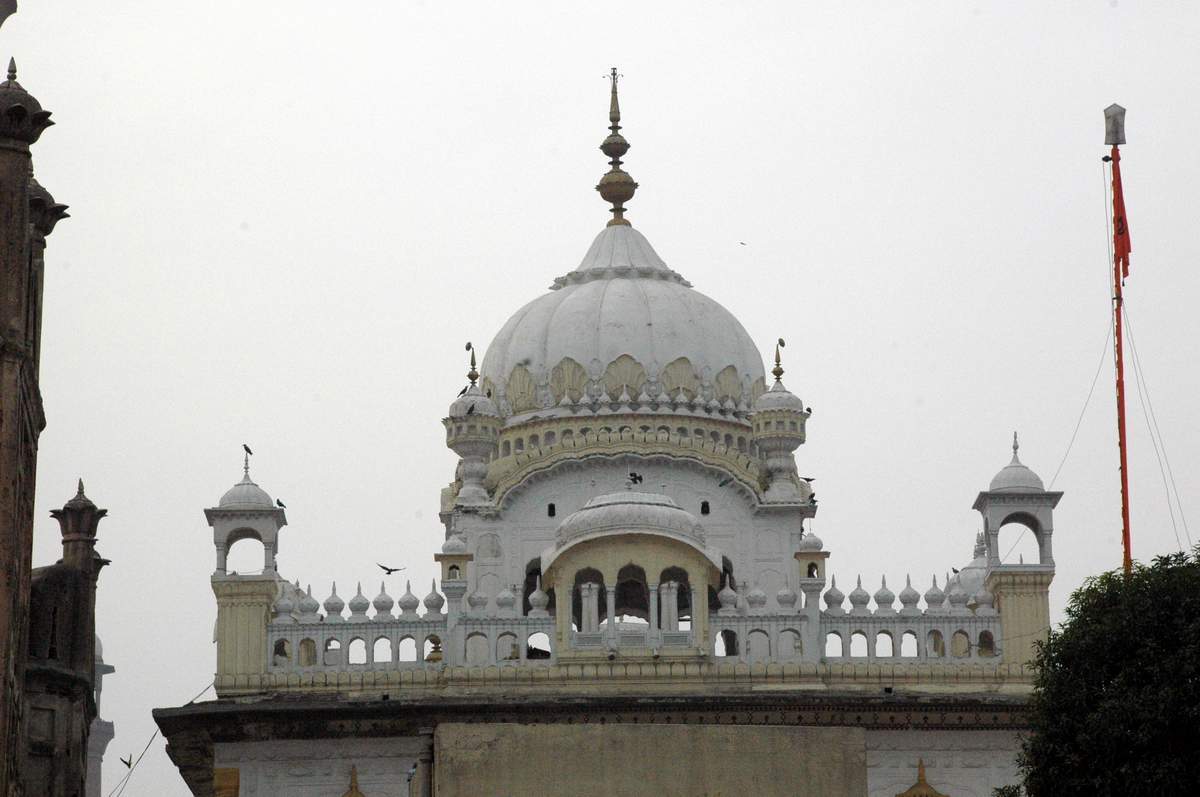
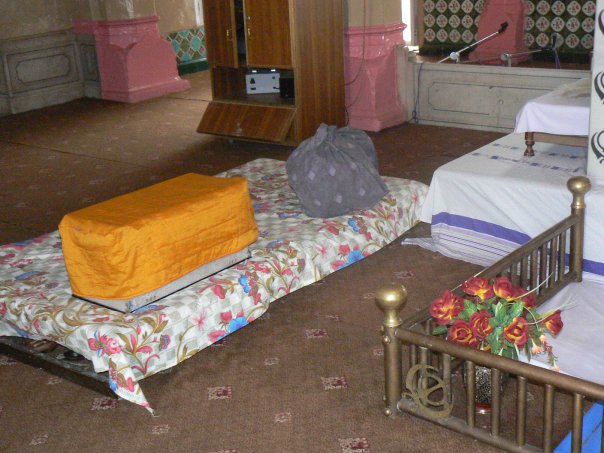
The Samadhi of Ranjit Singh is the mausoleum of the Sikh ruler Maharaja Ranjit Singh. It is located near the Lahore Fort and Badshahi Mosque in Lahore, Pakistan. Construction was started by his son, Kharak Singh on the spot where he was cremated, and was completed by his youngest son, Duleep Singh in 1848.

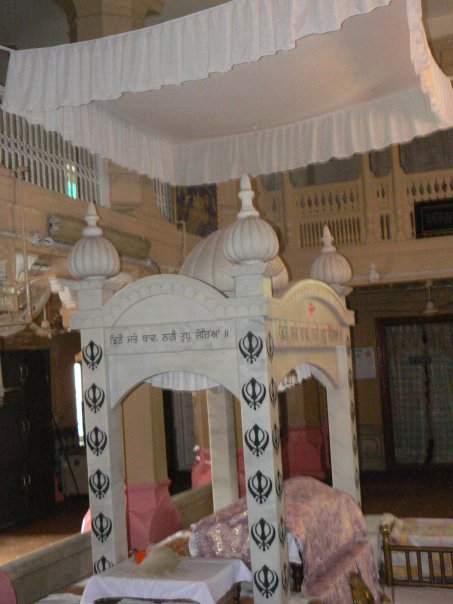
The tomb exemplifies Sikh architecture, it is gilded fluted domes and cupolas and an ornate balustrade round the top. Ranjit Singh's ashes are contained in a marble urn in the shape of a lotus, sheltered under a marble pavilion inlaid with pietra dura, in the centre of the tomb.